

UNITED SIKHS Panjab Flood Relief 2025
Restoring Hope. Rebuilding Lives.
Overview and Impact of the Floods
The 2025 monsoon season brought devastating floods to Panjab, submerging 769 villages and affecting over 601,000 people. Torrential rains, coupled with excess water releases from the Sutlej, Ravi, and Beas rivers, triggered large-scale inundation across multiple districts. Homes, fields, and public infrastructure were severely damaged, displacing families and crippling local livelihoods.
Despite the immense scale of destruction, the spirit of resilience in Panjab remains unbroken. UNITED SIKHS launched an immediate and coordinated humanitarian response to support the affected communities.
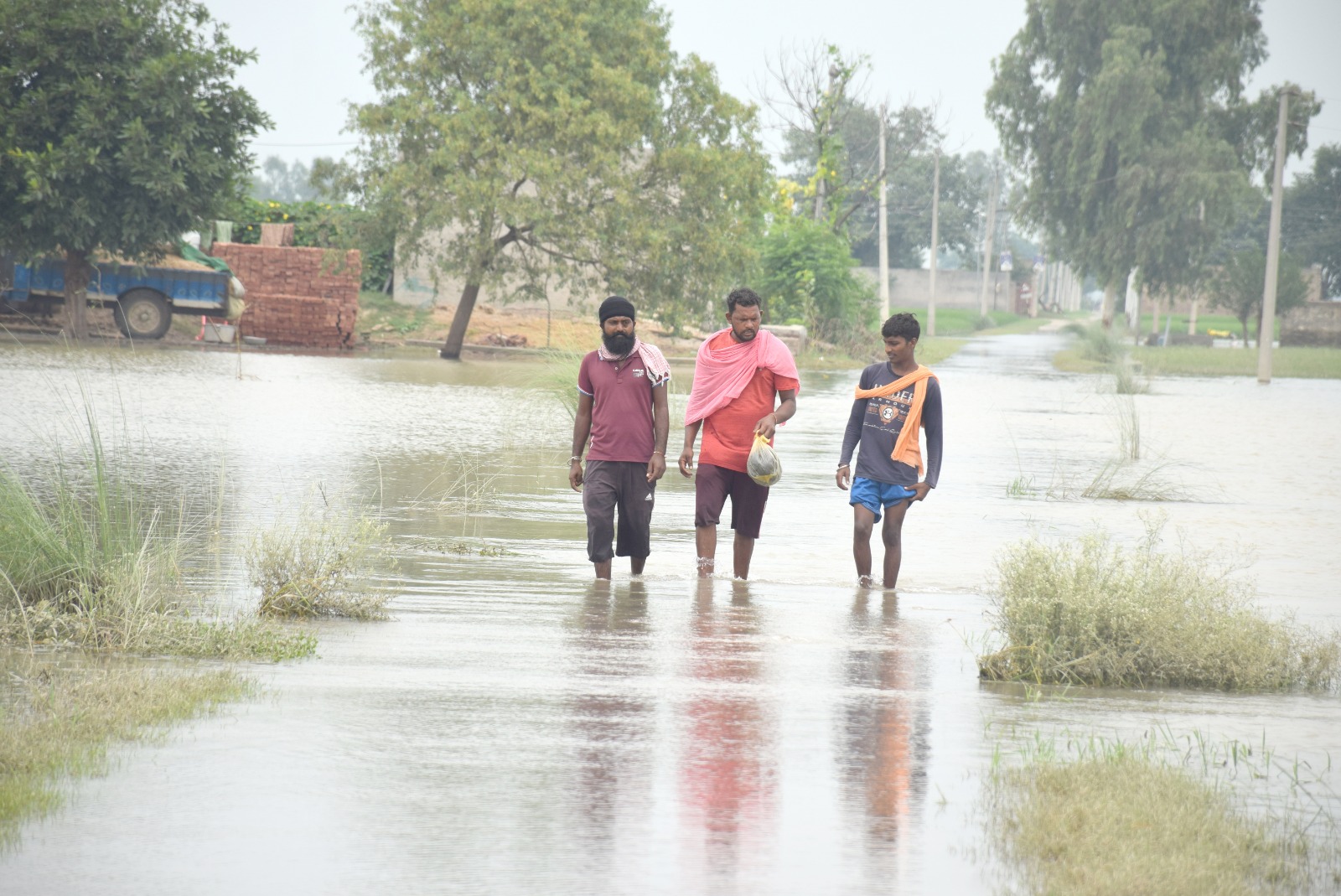
Challenges in the Aftermath
UNITED SIKHS, a UN-affiliated humanitarian organization, immediately launched a large-scale disaster response mission across flood-affected Panjab. Guided by the Sikh principle of seva (selfless service), the mission focused on emergency relief, medical care, and long-term rehabilitation.
Our strategic response plan focused on four key areas:
- Immediate Relief: Supplying food, water, shelter, and medical aid to displaced families.
- Health Protection: Deploying Mobile Medical Units (MMUs) and fogging operations to curb disease outbreaks.
- Agricultural Recovery: Supporting farmers through diesel aid, seed distribution, and field restoration.
- Sustainable Rehabilitation: Enabling self-employment and long-term recovery through Project Kirti.
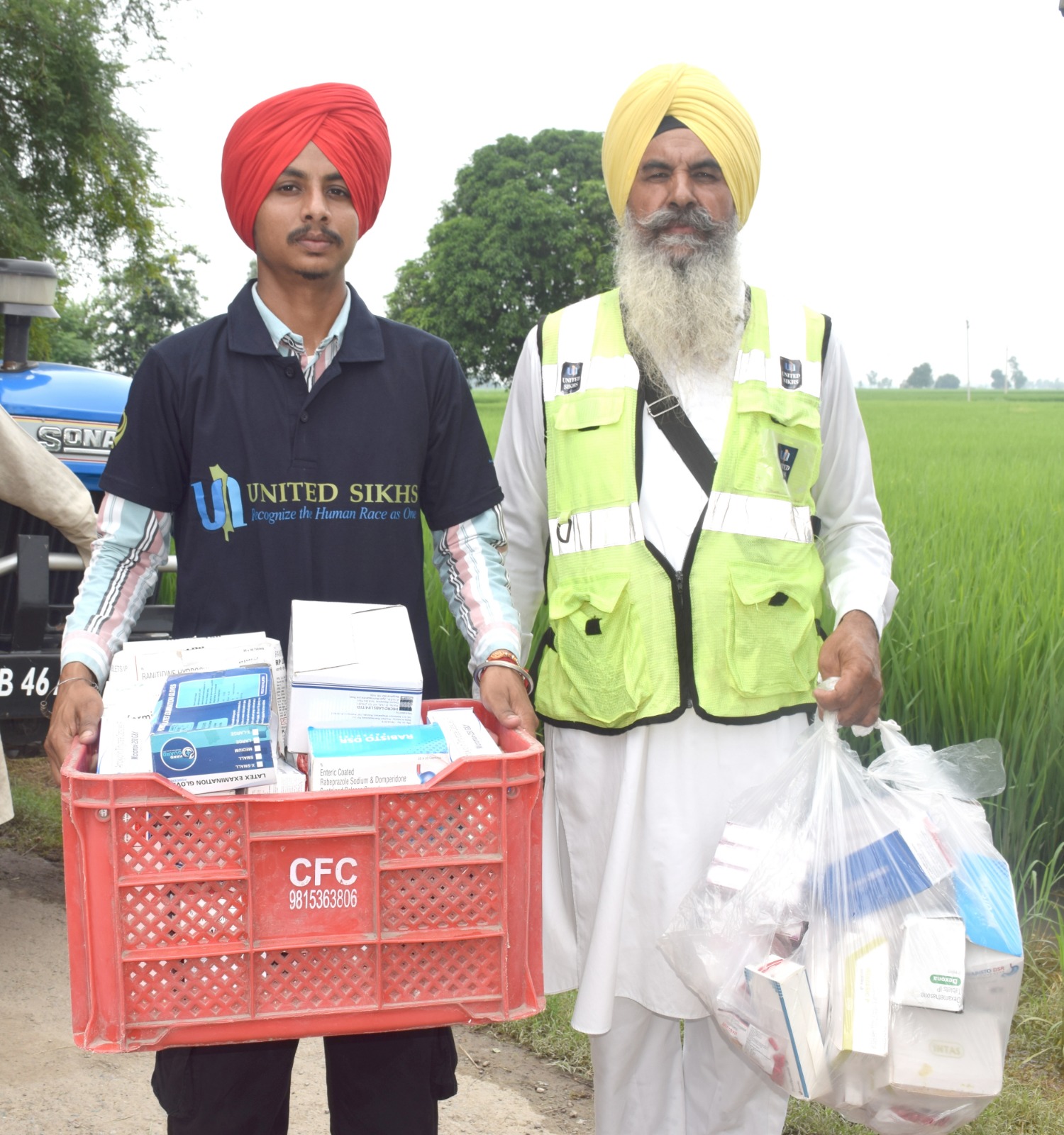
Medical Camps and Ration Distribution
UNITED SIKHS teams established medical camps and organized ration distribution drives across flood-affected districts. These initiatives addressed immediate food, emergency assistance, and healthcare needs of displaced families.
Each medical camp was staffed by doctors and medical professionals who provided essential treatment, preventive care, and medicines to hundreds of flood victims daily. Thousands of families received ration kits containing staples, clean water, and daily necessities, ensuring that no household was left unsupported.
Combating Health Hazards and Disease Outbreaks
Floodwaters created fertile ground for outbreaks of eye-flu, dengue, and other vector-borne diseases. UNITED SIKHS volunteers proactively conducted fogging operations and distributed preventive medicines, hygiene kits, and mosquito nets.
Our Jammu-based relief teams disinfected villages, schools, and public areas using fogging machines, significantly reducing mosquito density and safeguarding community health.
Fogging operations were completed in:
- Village Adian,
- Thatharke, Kalanor,
- Khasawali,
- Palle Nangal,
- Qadian,
- Vairoka,
- Machhiwal,
- Sujada Kala,
- Deriwal Kiran,
- Khushipur
- Gurdaspur
- Dera Baba Nanak regions
Shelter and Protection Initiatives
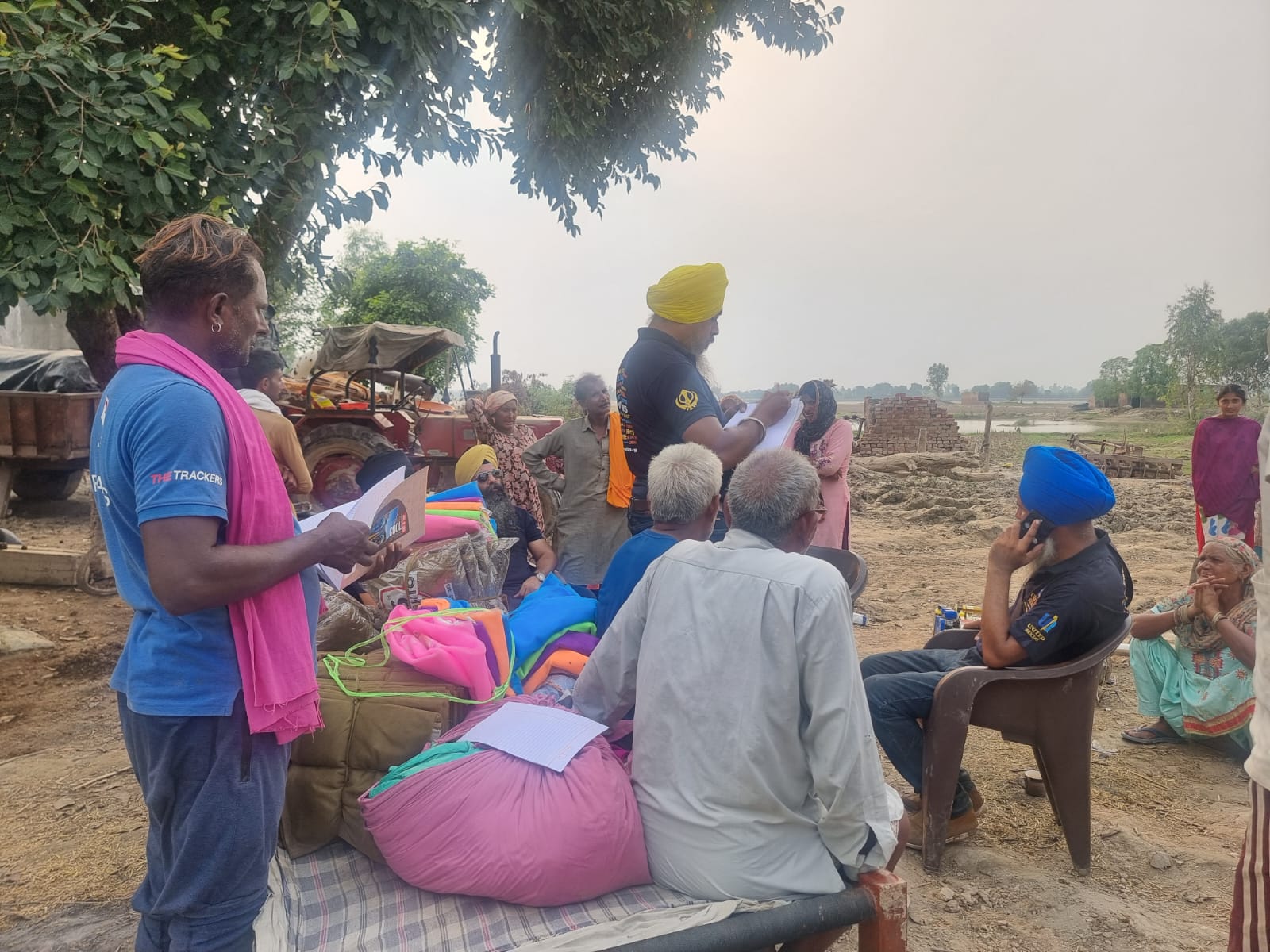
Recognizing the urgent need for safe shelter, UNITED SIKHS distributed tents, mattresses, mosquito nets, and anti-allergy creams to families who lost their homes. These essentials provided immediate protection and comfort amid harsh post-flood conditions.
In several areas, volunteers assisted communities in setting up temporary shelters and worked alongside local authorities to identify families requiring housing reconstruction.
Supporting Farmers and Agricultural Recovery
Agriculture, the backbone of Panjab’s economy was hit hardest. UNITED SIKHS extended comprehensive support to help farmers resume cultivation and reclaim their livelihoods.
Key actions included:
- Distribution of diesel to power water pumps for draining flooded fields.
- Provision of fertilizers, seeds, and input materials to prepare for the next sowing cycle.
- 4,500 acres treated with fertilizer, 2,000 acres re-seeded, and 6,000 liters of diesel distributed.
Farmers expressed deep gratitude for the assistance that allowed them to restart operations and recover lost income.

Empowering Communities through Seedlings and Diesel Assistance
UNITED SIKHS initiated the “Sowing the Seeds of Recovery” phase — supporting farmers with seedlings and diesel to restart agricultural activities. Our teams distributed 200 liters of diesel each to villages in Sardulgarh and Sultanpur Lodhi, ensuring timely water removal from fields and protecting the next crop cycle.
This initiative reflects our long-term commitment to rebuilding Panjab’s agricultural economy. The flood response inspired countless acts of compassion. A group of parents from a Chandigarh school adopted four families from Phoos Mandi village, pledging to support them until recovery. Their gesture symbolizes the collective humanity that continues to drive this mission forward.
Mobile Medical Units: Ambulance Seva in Action
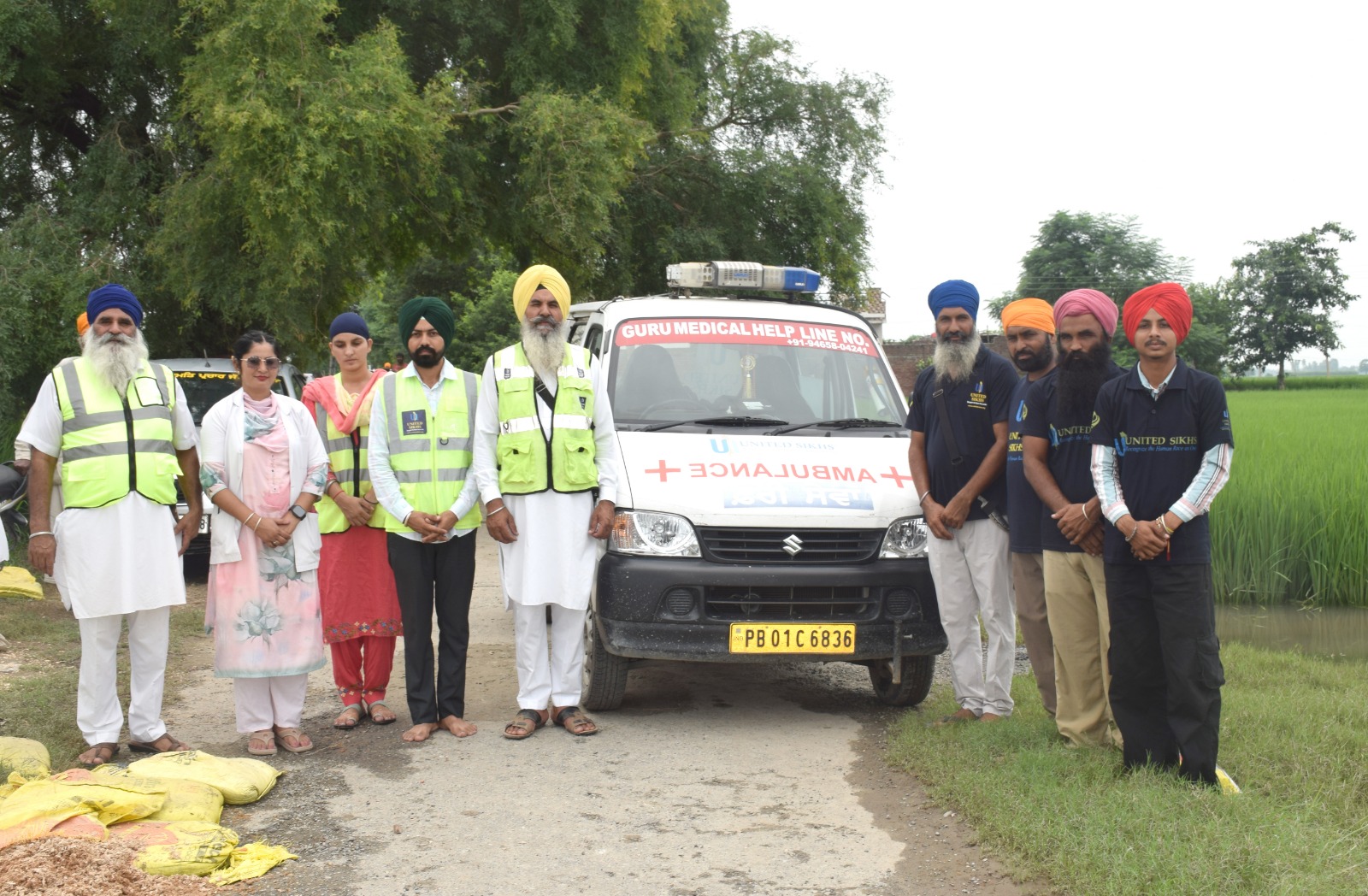
UNITED SIKHS deployed Mobile Medical Units (MMUs), staffed by volunteer doctors and paramedics, to reach villages inaccessible by road. These units treated hundreds of patients daily, provided vaccinations, and distributed essential medicines.
As Angad Pal Singh, MMU Project Director, stated:
“Our ambulance seva is rooted in the Sikh principle of Sarbat da Bhala, the welfare of all. We are here not only to heal bodies, but to uplift spirits.”
Mobile Medical Units: Ambulance Seva in Action
UNITED SIKHS deployed Mobile Medical Units (MMUs), staffed by volunteer doctors and paramedics, to reach villages inaccessible by road. These units treated hundreds of patients daily, provided vaccinations, and distributed essential medicines.
District-Wise Relief Outreach
Relief operations have been conducted across 11 districts, including:
Rupnagar, Patiala, Mansa, Sri Amritsar, Jalandhar, Ludhiana, Nawashahr, Sangrur, Kapurthala, Ferozepur, and Gurdaspur.
Cumulative Impact:
- 520+ flood-affected locations reached
- 120,000+ individuals provided with medical assistance
- 40,000+ individuals received ration and essentials
- Cash aid of ₹2.5 lakh distributed to 50 families across 16 villages in Sangrur
- 11 villages in Ferozepur adopted for sustained recovery
These figures represent not just numbers — but lives touched, homes restored, and futures rekindled.
Phase 3: Restoration
After months of emergency relief, UNITED SIKHS has entered Phase 3: Restoration, focusing on rebuilding livelihoods and ensuring long-term community recovery. This phase is designed to restore dignity, stability, and self-reliance across flood-affected villages in Panjab.
- Permanent Housing Reconstruction
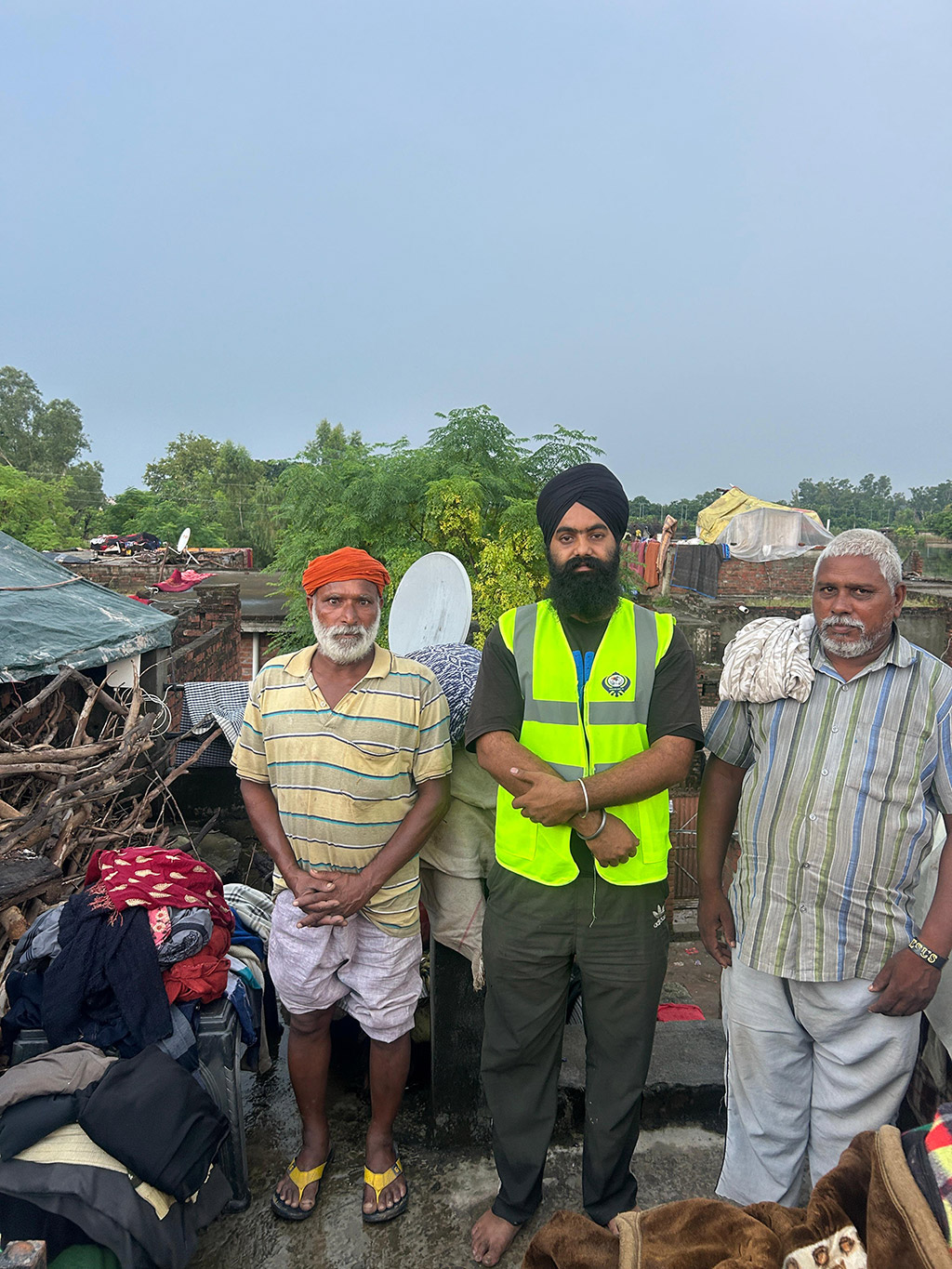
Many families continue to live in temporary shelters after losing their homes to the floods. UNITED SIKHS is supporting the construction of safe, permanent housing using sustainable materials, ensuring every family has a stable roof over their head and renewed sense of security.
2. Small Business Support and Skill Development
To help families regain financial independence, UNITED SIKHS is initiating small business aid through micro-grants and vocational training. Skill-building programs are being introduced in tailoring, food processing, and local trades to empower families—especially women—to restart their livelihoods.
3. Agricultural Re-Seeding and Livestock Protection
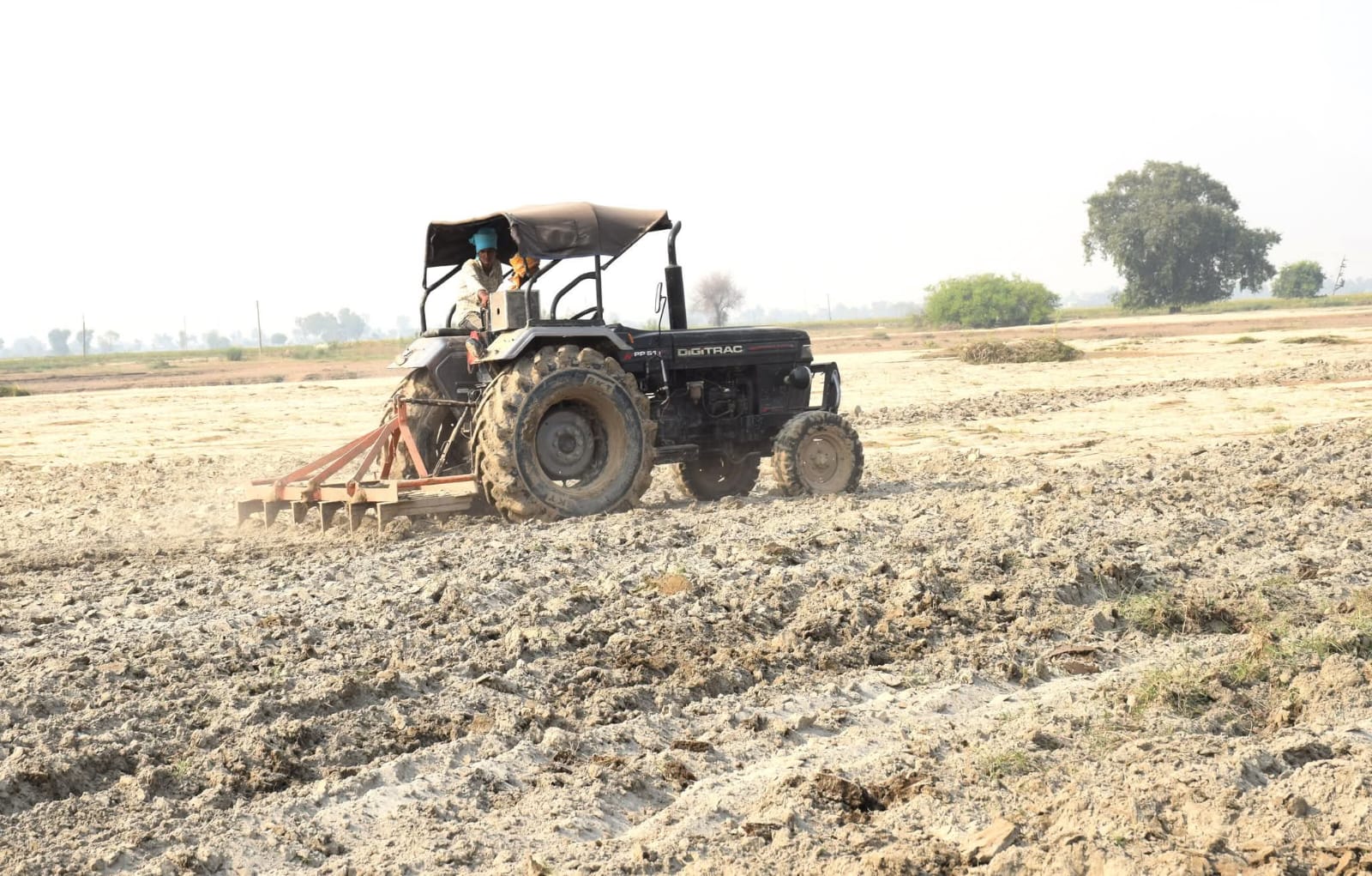
With agriculture being Panjab’s backbone, this effort focuses on restoring farmlands through re-seeding and soil treatment. Farmers are being provided with quality seeds, fertilizers, and assistance for livestock protection, helping them return to cultivation and rebuild lost income sources.
- Long-Term Healthcare and Disease Prevention
Flood-affected areas remain vulnerable to recurring health challenges. Mobile medical units and local clinics are being strengthened to ensure continuous access to healthcare. Preventive programs for hygiene, clean water, and seasonal disease control will protect communities from future health risks. - Education Continuity for Children
Many children faced disruption in learning due to displacement and damage to schools. UNITED SIKHS is supporting educational continuity through temporary classrooms, supply distribution, and scholarship aid so that no child’s education is halted by disaster.
Conclusion
The floods of 2025 left Panjab reeling but not defeated. UNITED SIKHS’ relentless efforts have shown that compassion and community can overcome even the greatest adversity.
From fogging villages to feeding families, from empowering farmers to restoring homes, every act of seva has been a step toward healing. The mission now moves from relief to renewal, from survival to strength.
Our promise to Panjab stands firm: to rebuild with dignity, resilience, and faith. UNITED SIKHS will continue serving until every family stands restored, every field is sown again, and every life touched by this tragedy finds hope once more.